
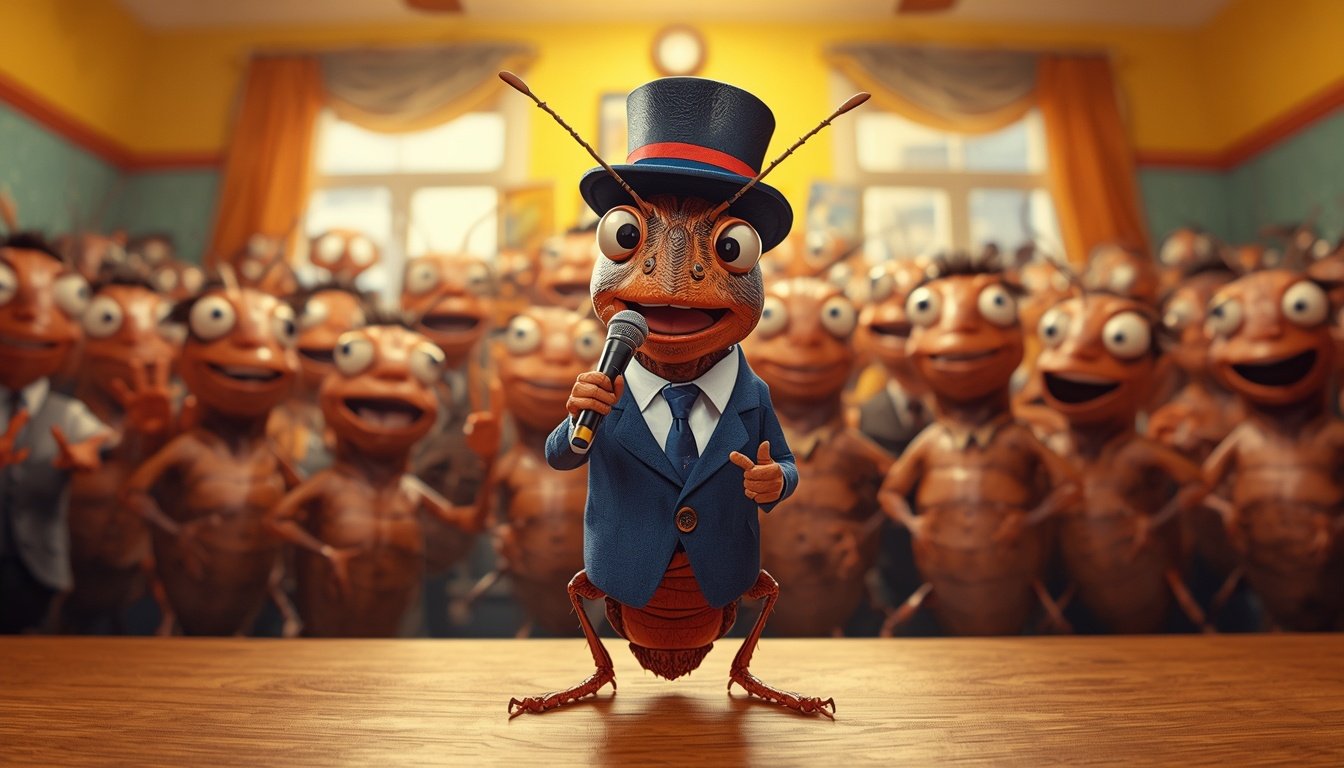
**On May 15, 2026, during a hearing in the Supreme Court, Chief Justice of India Suryakant made an unexpected and startling statement. He characterized certain unemployed youth as "cockroaches," describing them as individuals who are struggling to find employment and lacking a place in professional fields. He noted that while some may engage in media or activism, they often use their platforms to criticize the nation. This commentary struck a chord in a context where recent events, such as the leakage of the NEET exam paper, rampant unemployment, and rising inflation, had left the youth feeling increasingly disheartened. Naturally, this comment captured widespread media attention and left the nation in shock.
Subsequently, on May 16, CJI Suryakant clarified that his remarks had been misconstrued and were specifically directed at individuals with fraudulent credentials infiltrating various sectors, such as law and media. He reiterated that the youth are, in fact, vital to a developed India. Nevertheless, the damage had been done, and the narrative was already gaining momentum.
On the same day, Abhijit Deepke, a 30-year-old student at Boston University, tweeted, "What if all cockroaches come together?" Shortly thereafter, he launched a social media movement named the Cockroach Janta Party (CJP). Although not an officially registered political entity, it attracted millions of followers and mimicked the style of popular political parties in a humorous manner.
Membership criteria for the CJP were satirical, asking only three questions: Do you consider yourself lazy? Do you spend long hours online? And do you identify with being a cockroach? Surprisingly, the CJP amassed over 40,000 Twitter followers within two days and over 8 million Instagram followers in four days, surpassing even the Bharatiya Janata Party (BJP).
This rapid growth raised questions about the seriousness of the movement and the reactions it elicited from politicians. As the CJP gained traction, videos and songs began circulating, reflecting the frustrations of a youth disillusioned with systemic issues such as exam leaks and unemployment.
The narrative matured as a manifesto with five demands was released on the CJP's website. These included significant changes in governance and electoral accountability, underscoring the serious nature of the concerns raised.
As the movement began to address pressing societal issues, it incurred the ire of the BJP and the government. Calls for the resignation of Education Minister Dharmendra Pradhan in response to the NEET paper leak resonated deeply, marking a pivotal moment where the frustrations of students found a legitimate platform.
However, this attention came with consequences. Shortly after gaining notoriety, the CJP's Twitter account was blocked in India, allegedly on the grounds of national security, as claimed by the Intelligence Bureau. This led to questions about the government's apprehension regarding a satirical movement.
The situation escalated further, with threats directed at Abhijit Deepke, including attempts to compromise his personal information and intimidation tactics against his family. Such actions highlighted the desperate measures the government might take against perceived dissent, reflecting a deeper issue regarding the suppression of free speech and the hostile climate for opposition in contemporary India.
As the CJP faced various challenges, including the abrupt cessation of their social media presence, it became evident that the underlying concerns driving the movement resonated profoundly with the youth. Their demands, while wrapped in humor, addressed legitimate systemic failures that have left many feeling disenfranchised. Ultimately, this episode emphasizes that a joking condemnation of the status quo has the potential to amplify significant societal grievances, galvanizing a generation that is increasingly skeptical of authority.**