
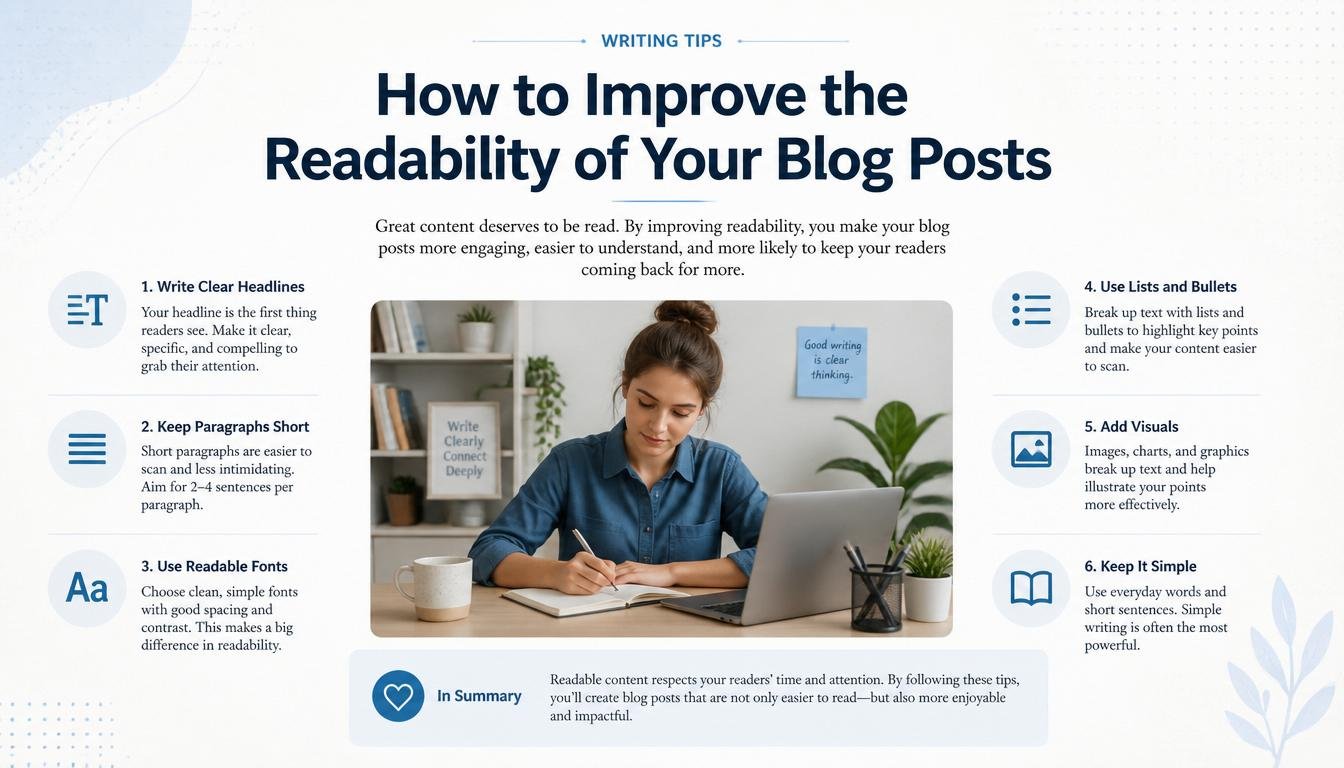
How to Improve the Readability of Your Blog Posts
A well-researched blog post can still fail if readers find it hard to get through. Readability isn't about dumbing down your writing — it's about making sure your ideas reach the reader without unnecessary friction. Here's how to improve it.
1. Write Shorter Sentences
Long, winding sentences with multiple clauses force readers to work harder to follow your point. Aim to express one idea per sentence, and break longer thoughts into two sentences when needed.
2. Use Short Paragraphs
Large blocks of text look intimidating, especially on mobile screens. Keep paragraphs to two or three sentences where possible, giving readers natural pause points.
3. Add Subheadings
Subheadings break your content into scannable sections, letting readers quickly find the part that's relevant to them. They also help readers who skim before deciding to read in full.
4. Use Bullet Points and Numbered Lists
When you're presenting steps, tips, or multiple related points, lists are far easier to scan than a paragraph trying to cram in the same information.
5. Choose Simple Words Over Complex Ones
Unless you're writing for a specialized academic audience, prefer common words over jargon. If a simpler word says the same thing, use it.
6. Avoid Passive Voice Where Possible
Active voice ("The team finished the project") is more direct and easier to process than passive voice ("The project was finished by the team"). Use passive voice sparingly, only when it genuinely fits the sentence better.
7. Read Your Draft Out Loud
If a sentence feels awkward to say out loud, it will likely feel awkward to read too. This simple test catches issues that are easy to miss when reading silently.
8. Use Transition Words
Words like "however," "for example," and "as a result" help guide readers from one idea to the next, making your writing feel more connected and logical.
9. Break Up Text with Visuals
Images, charts, or pull quotes give readers a visual break and can reinforce your points, especially in longer articles.
10. Test with a Readability Tool
Tools that score your text's reading level can highlight sentences that are unusually complex, giving you a clear starting point for revision.
Final Thoughts
Readability isn't a stylistic afterthought — it directly affects whether people finish reading what you've written, and whether they come back for more. Small changes like shorter sentences, clear subheadings, and simple word choices make a noticeable difference in how your content performs.