
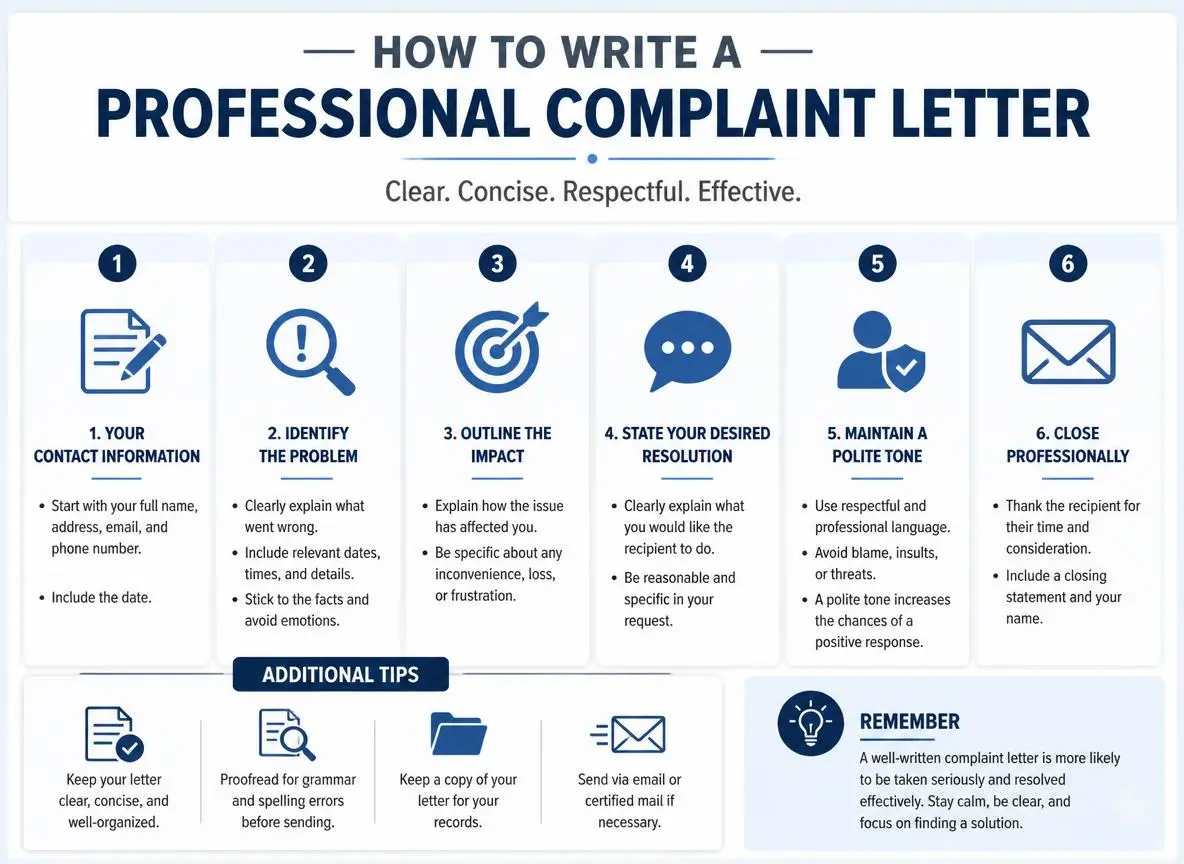
How to Write a Professional Complaint Letter
A well-written complaint letter is far more likely to get results than an angry, emotional one. Companies and institutions respond faster and more constructively to complaints that are clear, specific, and professional, because they are easier to act on. This guide covers how to write a complaint that gets taken seriously.
Start With the Facts, Not the Frustration
Open by stating clearly what happened, including relevant dates, order numbers, or reference details. "On March 3rd, I ordered product X (Order #12345), which arrived damaged" gives the recipient everything they need to locate your case immediately, without requiring back-and-forth just to understand the situation.
State the Impact Clearly
Explain briefly how the issue affected you — lost time, inconvenience, financial cost — without exaggeration. Specific, concrete impact is more persuasive than general complaints about frustration or anger.
Be Specific About What You Want
Vague complaints often receive vague responses. State clearly what resolution you are seeking: a refund, a replacement, an apology, a policy change. This gives the recipient a clear, actionable request rather than leaving them to guess what would satisfy you.
Keep Emotion Out of the Language
It is natural to feel frustrated, but a complaint letter is far more effective when it stays factual and composed. Phrases like "this is completely unacceptable" or "I am furious" tend to put the reader on the defensive, making a constructive resolution less likely. Stating the facts plainly, without inflammatory language, tends to be taken more seriously and gets a faster response.
A Simple Structure
Opening: State the issue and relevant reference details. Middle: Explain what happened and its impact, briefly. Request: State exactly what resolution you want. Close: Provide a reasonable timeframe for response and your contact information.
Example Opening
"I am writing regarding Order #48213, placed on June 2nd, which arrived with a broken screen. I have attached photos for reference. I would like to request a full replacement or refund, and I would appreciate a response within five business days."
Escalating Professionally
If an initial complaint does not receive a satisfactory response, a follow-up letter can reference the original complaint date, restate the request, and note that you are prepared to escalate further (to a manager, a regulatory body, or a public review) if needed — stated factually rather than as a threat.
Final Thought
A complaint letter works best when it reads like a problem to be solved together rather than an attack. Clear facts, a specific request, and a professional tone give the recipient every reason to resolve the issue quickly and rarely give them a reason to become defensive.