How to Write an Engaging Newsletter
Email newsletters remain one of the most effective ways to build a direct, ongoing relationship with an audience, free from the shifting algorithms of social media platforms. But a newsletter only delivers value if people actually open, read, and look forward to it. This guide covers what separates newsletters people eagerly anticipate from ones they quietly unsubscribe from.
Start With a Clear Purpose
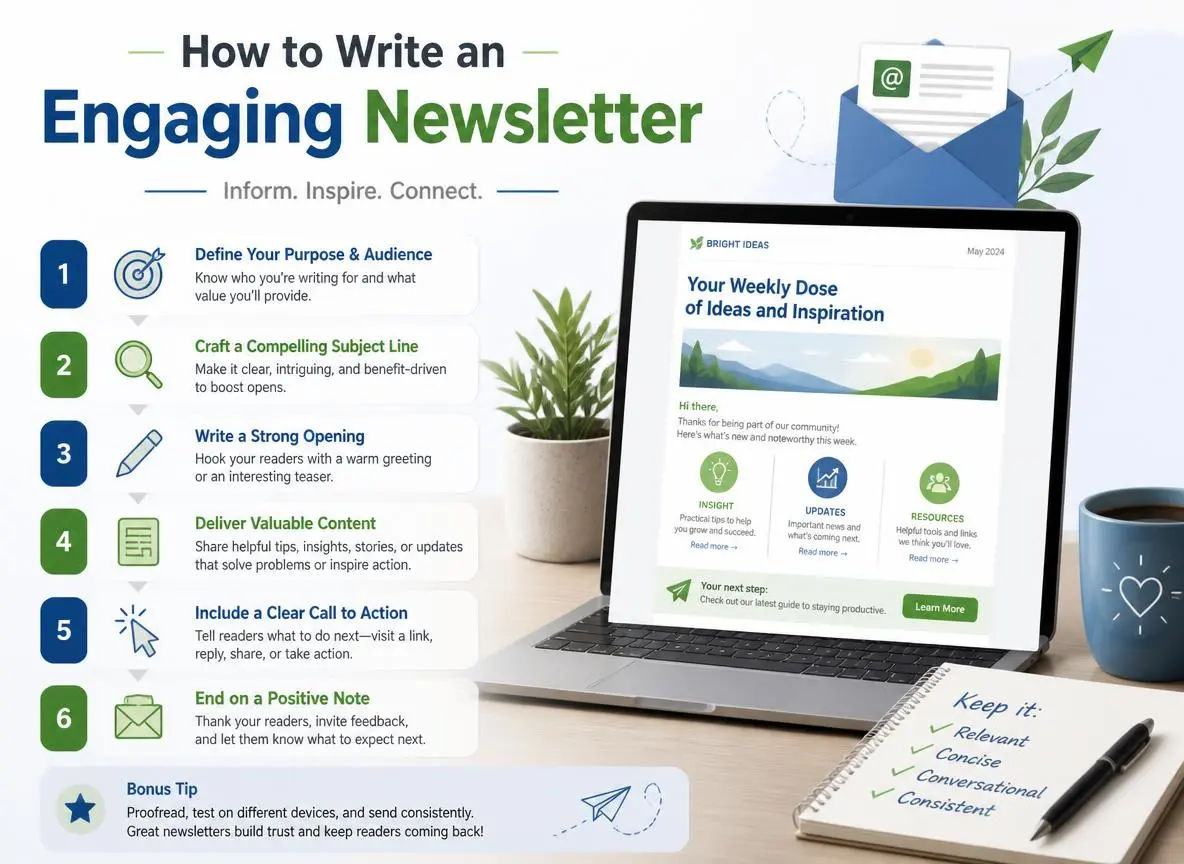
Before writing a single issue, define what your newsletter is actually for: is it curating useful information, sharing original insights, providing updates on your work, or building community around a shared interest? A newsletter without a clear purpose tends to feel scattered and provides little reason for subscribers to keep opening it issue after issue.
Writing a Subject Line That Gets Opened
The subject line determines whether your newsletter gets read at all. Effective subject lines are specific, create genuine curiosity, and set accurate expectations for the content inside — the same principles that apply to strong, non-manipulative headlines generally. Avoid vague subject lines like "Monthly Update" in favor of something more specific: "3 Tools That Saved Me 5 Hours This Week."
Structuring the Content
Open with something personal or timely.
A brief, genuine opening — a quick thought, an observation, a small update — helps newsletters feel like they come from a real person rather than an automated broadcast.
Lead with your strongest content.
Readers often skim rather than read every word, so put your most valuable or interesting item first, not buried at the bottom.
Use short paragraphs and clear formatting.
Email is typically read quickly, often on mobile devices, so short paragraphs, bullet points, and bolded key phrases help readers extract value even when skimming.
Keep a consistent structure across issues.
A predictable format (for example, always leading with a main insight, followed by a few curated links, followed by a personal note) helps readers know what to expect and makes the newsletter feel familiar rather than requiring them to reorient every time.
Writing in a Genuine, Consistent Voice
Newsletters that read like a genuine, consistent voice tend to build stronger relationships with subscribers than those that feel corporate or impersonal. Writing the way you would talk to a specific, real subscriber, rather than to a faceless mass audience, tends to produce warmer, more engaging writing.
Balancing Value and Promotion
If your newsletter includes any promotional content, such as your own products or services, the value-to-promotion ratio matters enormously for long-term subscriber retention. Newsletters that consistently deliver more genuine value than promotional pitches maintain far higher engagement over time than newsletters that feel primarily like sales vehicles with occasional useful content mixed in.
Encouraging Engagement
Simple techniques like ending with a genuine question, inviting replies, or asking for feedback can turn a newsletter from a one-way broadcast into more of a conversation, which tends to build stronger, longer-lasting subscriber relationships.
Consistency Matters More Than Frequency
A newsletter sent reliably every two weeks tends to perform better over time than one sent erratically, sometimes weekly and sometimes not for two months. Choosing a sustainable frequency and sticking to it builds a dependable habit for your readers, which matters more for long-term engagement than sending as often as possible.
Final Thought
A great newsletter feels less like marketing and more like a genuinely useful, well-written message from someone worth hearing from regularly. Clear purpose, a strong subject line, consistent structure, and an authentic voice are the foundation that keeps subscribers opening issue after issue rather than scrolling past or unsubscribing.