How to Write Click-Worthy Headlines Without Clickbait
A great headline earns a click by promising real value, while clickbait earns a click by manufacturing false curiosity that the article fails to deliver on. The distinction matters enormously for long-term trust — readers who feel misled by a headline rarely return, while readers who find exactly what a headline promised become repeat visitors. This guide covers how to write headlines that genuinely perform well without relying on manipulative tactics.
What Makes Clickbait Different From a Strong Headline
Clickbait typically withholds essential information to create artificial curiosity: "You Won't Believe What Happened Next" or "This One Trick Doctors Don't Want You to Know." These headlines rely on a curiosity gap so wide that almost any actual content feels disappointing by comparison.
A strong, non-manipulative headline creates genuine interest while still conveying real information about what the reader will get. It sets accurate expectations and then meets them.
Techniques for Strong, Honest Headlines
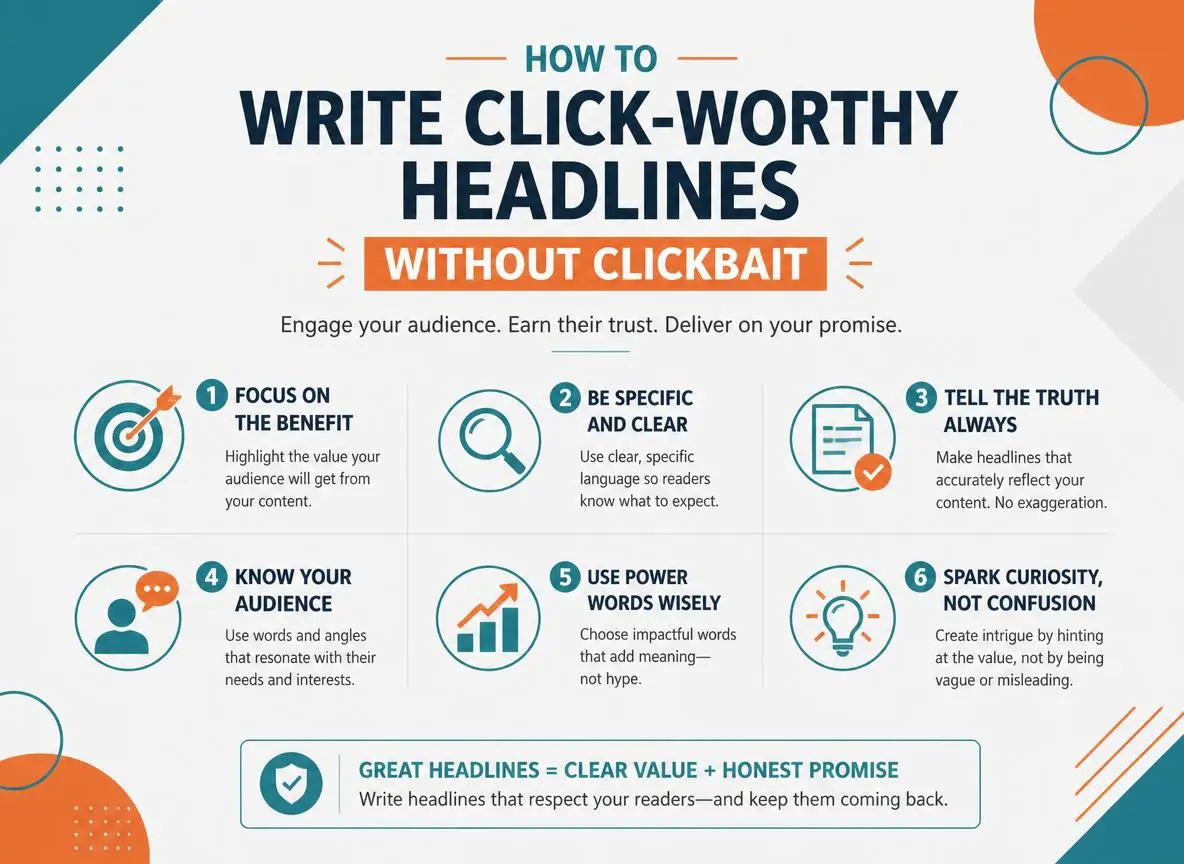
Be specific rather than vague. "5 Proven Ways to Reduce Email Response Time by Half" is more compelling and more honest than "This Will Change How You Do Email Forever," because it tells the reader exactly what to expect while still being interesting.
Lead with the reader's benefit. Headlines built around what the reader will gain — time saved, a problem solved, a skill learned — tend to perform better than headlines built around abstract claims about the content itself.
Use numbers when they add clarity. "7 Common Grammar Mistakes and How to Fix Them" sets a clear scope and signals a scannable, practical structure, which readers often find more inviting than an open-ended headline.
Ask a genuine question the article answers. A well-chosen question headline works when the article genuinely and fully answers it, rather than teasing an answer that requires reading through unrelated content first.
Use strong, precise verbs. "Cut," "boost," "avoid," and "fix" carry more energy than generic verbs like "improve" or "help," making headlines feel more active and concrete.
The Curiosity Gap, Used Honestly
Curiosity is not inherently manipulative; the difference lies in whether the gap gets closed fairly. A headline like "The Surprising Reason Your Emails Go Unanswered" creates curiosity, but as long as the article delivers a genuinely surprising, well-supported reason, this is an honest use of curiosity rather than clickbait.
The test is simple: if someone read only the headline and then the article, would they feel the headline was accurate, or would they feel tricked? Strong headlines pass this test consistently.
SEO Considerations
Headlines also need to work for search engines, which generally means including the primary keyword naturally, keeping length reasonable (roughly under 60 characters for search result display), and avoiding needless keyword stuffing that makes the headline feel unnatural. The best SEO headlines are the ones that would work well even without any SEO considerations — clear, specific, and genuinely descriptive of the content.
Testing and Iterating
For content published across multiple platforms, testing a few headline variations, when possible, provides real data about what resonates with your specific audience, since headline performance can vary significantly based on audience and platform. Even without formal A/B testing tools, drafting three or four headline options and evaluating them against the principles above before publishing improves results over defaulting to the first idea that comes to mind.
Final Thought
The best headlines are not tricks; they are promises. Writing headlines that create genuine curiosity while accurately representing the content beneath them builds an audience that trusts your work — and trust, over time, is worth far more than any single click.